Sleep Washes Your Brain: The Glymphatic System Explained
You wake up after a good night of sleep. Your head feels lighter. Your thoughts seem sharper. Even a difficult problem can feel easier to solve than it did the night before.
That clear-headed feeling may have a surprising explanation. While you sleep, your brain could be running a cleaning process that helps remove waste products built up during the day.
Scientists call this process the glymphatic system. It involves fluid moving through spaces around brain cells, carrying certain waste substances away. Research suggests that this system may work differently during sleep and wakefulness.
Your brain does not simply switch off when you close your eyes. It continues working, processing information and maintaining the cells that make thinking possible. Researchers are now investigating whether sleep also gives the brain a chance to clear away some of the waste produced during the day.
Quick answer: Does sleep wash your brain?
Possibly. Research suggests that sleep may help the brain move fluid through spaces around its cells and remove certain waste products. A 2013 study by Xie and colleagues found that beta amyloid was cleared about twice as fast in sleeping mice as in awake mice. However, the process remains debated, and scientists have not established how much waste this system removes in sleeping humans.
TL;DR
- In the 2013 Xie study, the space between brain cells grew by about two-thirds during sleep in mice, from 14.1 percent awake to 23.4 percent asleep, and beta amyloid was cleared about twice as fast asleep as awake.
- The glymphatic system is a proposed cleaning pathway: cerebrospinal fluid flows in along arteries, through brain tissue, and out along veins, helped by aquaporin 4 water channels.
- The idea is still debated: a 2024 mouse study found clearance slower during sleep, and human evidence so far is fluid waves on MRI, not measured waste removal. Keep a fixed wake time, wind down 30 minutes, and get morning daylight.
Contents
- The moment: why your brain feels clearer after sleep
- The discovery: meet the glymphatic system
- Why brain cleaning during sleep matters
- The honest limits: what scientists still do not know
- How to use this science in everyday life
- The plan: a simple sleep routine you can start tonight
- Frequently asked questions
- The takeaway: give your brain time to rest
- Sources and scientific research
- Keep reading on Mind Facts Daily
1. The Moment: Why Your Brain Feels Clearer After Sleep
Think about how your mind feels after staying awake too long. Concentrating takes more effort. Small decisions feel harder. You might read the same sentence several times without taking it in.
Now compare that with the feeling of waking up after a restful night. Your attention may feel steadier. Your memory seems more accessible. Tasks that felt complicated yesterday can suddenly seem manageable.
Sleep does much more than make you feel rested. It supports memory processing, emotional regulation, attention and the normal functioning of brain cells.
But what if sleep also helps your brain take out the trash?
Researchers have been investigating a possible cleaning process that becomes particularly important during sleep. It involves fluid moving through the brain and carrying certain substances away from the spaces around nerve cells.
This process is known as the glymphatic system. The research is still developing, but it has raised an important question: could a good night's sleep help your brain clear waste that accumulates while you are awake?

Sleep is active maintenance, not simply rest
Your brain remains active throughout the night. It processes memories, regulates important biological functions and moves through several distinct stages of sleep.
Scientists have suggested that these stages may also create conditions that support brain maintenance.
The glymphatic system is one possible part of this larger picture. It is not the only explanation for why sleep matters.
For another look at how everyday habits influence thinking, read Exercise and Memory: What a Landmark Brain Study Really Found.
2. The Discovery: Meet the Glymphatic System
For a long time, scientists understood that the brain needed ways to remove waste. Other organs have well-developed cleaning and drainage systems. The brain, however, presented a different challenge.
It is protected by the skull and surrounded by specialized tissues and barriers. Its cleaning processes do not work exactly like those in the kidneys or liver.
In 2012, researchers led by Jeffrey Iliff described a pathway that helped explain how fluid could move through brain tissue and carry waste away.
They called it the glymphatic system. The name combines glial cells, which support brain function, with the word lymphatic, referring to the body's waste drainage network.
How the cleaning pathway works
The basic idea is easier to understand when you picture a network of small channels surrounding blood vessels.
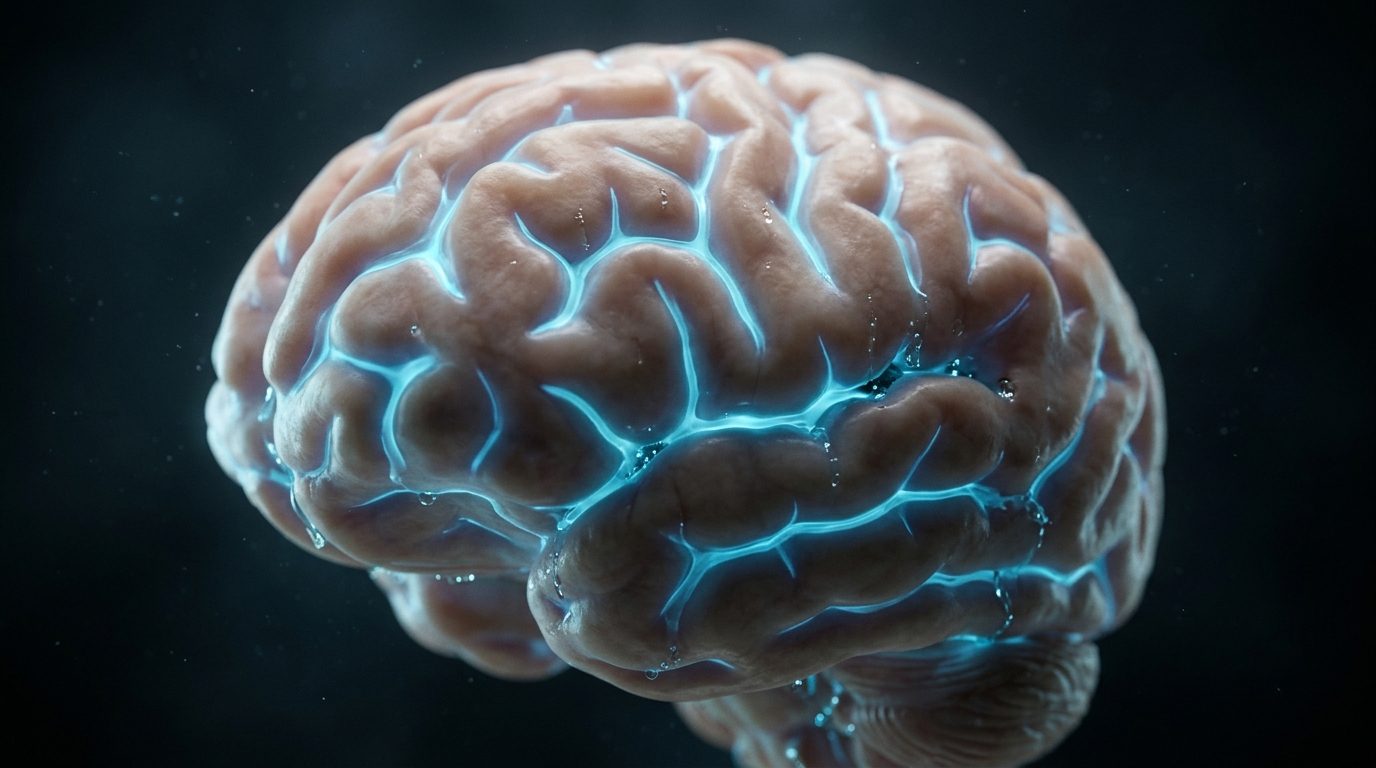
Cerebrospinal fluid, often shortened to CSF, is the clear fluid that surrounds the brain and spinal cord. According to the glymphatic model, this fluid moves into the brain along spaces surrounding arteries.
It then exchanges with interstitial fluid, the fluid occupying the spaces between brain cells. This movement allows dissolved substances to travel through the tissue.
The fluid eventually moves toward spaces surrounding veins, providing a route for waste products to leave brain tissue and reach drainage pathways outside the brain.
Supporting this process are glial cells, particularly astrocytes. These cells have structures that surround blood vessels and contain special water channels called aquaporin 4.
These channels help regulate water movement between different spaces. They are considered an important part of the proposed glymphatic pathway.

The 2013 experiment that changed the conversation
The most widely discussed evidence came in 2013, when researchers led by Lulu Xie published a study in the journal Science.
The team used live mice, two-photon imaging and tracer measurements to investigate what happened to fluid movement in the brain during sleep and wakefulness.
Their findings were striking.
During natural sleep or anesthesia, the space between brain cells expanded by about two-thirds. When the mice were awake, this space occupied approximately 14.1 percent of brain tissue. During sleep, it increased to approximately 23.4 percent.
That difference matters because larger spaces between cells could allow fluid to move more easily through brain tissue.
The researchers also tracked beta amyloid, a protein associated with Alzheimer's disease. They found that beta amyloid was cleared about twice as fast in sleeping mice as in awake mice.
Another finding helped explain the importance of water channels. When the researchers removed aquaporin 4 channels, clearance of injected beta amyloid fell by 65 percent.
These results suggested that sleep could create conditions that help the brain move fluid and remove certain waste substances more efficiently.
It was a major step toward understanding the possible relationship between sleep and brain cleaning.
3. Why Brain Cleaning During Sleep Matters
Your brain is working constantly, even when you are sitting quietly. Neurons communicate, maintain their electrical activity and use energy to support everything from breathing to remembering a conversation.
All this activity produces metabolic byproducts. Some substances need to be transported away from brain tissue so that normal cellular processes can continue.
What kind of waste does the brain produce?
One substance that receives considerable attention is beta amyloid.
Beta amyloid is a protein fragment that can accumulate into deposits in the brains of people with Alzheimer's disease. Scientists have studied how its production and removal may contribute to the development of the condition.
Another important protein is tau. Tau normally helps stabilize structures inside nerve cells. Abnormal forms of tau can accumulate and are associated with several neurodegenerative conditions.
These proteins are not automatically harmful simply because they exist. Their normal biological roles matter. Problems can arise when abnormal amounts or forms accumulate in the wrong places.
Researchers are interested in whether the brain's fluid movement and drainage pathways help regulate these substances.
Why sleep could provide an advantage
The 2013 Xie study suggested that changes in the spaces between brain cells during sleep might make fluid exchange easier.
If this happens in the way the glymphatic model proposes, sleep could provide a period when certain waste products have a better opportunity to move away from brain tissue.
This is why the phrase sleep clears waste has become an important part of discussions about brain health.
It also offers a possible connection between long term sleep habits and neurological health. If waste removal is affected by sleep patterns, researchers want to understand whether years of disrupted sleep could influence the accumulation of certain proteins.
However, a possible biological connection is not proof that poor sleep causes Alzheimer's disease. Nor does the evidence show that getting extra sleep can reverse existing brain damage.
The glymphatic system is one area of research into brain maintenance, not a complete explanation of neurodegenerative disease.
Sleep also supports other processes that matter for clear thinking. If stress makes concentration difficult, the brain's emotional control systems are another important part of the story. See Why Stress Can Disrupt Clear Thinking: The Prefrontal Cortex Explained.
4. The Honest Limits: What Scientists Still Do Not Know
It is tempting to turn the discovery into a simple statement: sleep washes your brain clean every night.
But that would go further than the evidence allows.
There are important limitations, and understanding them makes the science more useful, not less interesting.
The original evidence came from mice
The Xie study involved live mice. It did not demonstrate that the same amount of fluid movement or waste removal happens in human brains.
Animal studies are essential for understanding biological mechanisms. Researchers can use imaging, tracers and controlled experiments that would not be practical or ethical in healthy human volunteers.
However, mouse brains and human brains are not identical. Scientists must test whether findings from animals apply to people before drawing firm conclusions about human health.
A 2024 study challenged the cleaning theory
One of the biggest challenges appeared in 2024.
Andawei Miao and colleagues published a study in Nature Neuroscience titled Brain clearance is reduced during sleep and anesthesia.
They measured the movement and clearance of fluorescent molecules in the brains of male mice. Their results pointed in the opposite direction from the original sleep cleaning theory.
They found that clearance was markedly reduced during sleep and anesthesia compared with wakefulness.
The researchers also argued that some earlier experiments may have confused two different processes: fluid and tracer entering brain tissue, and waste actually leaving it.
That distinction is important. Seeing more fluid enter the brain does not automatically prove that waste is leaving more quickly.
The 2024 findings do not settle the question either. Researchers continue to debate the methods used to measure fluid movement and clearance, and different experimental approaches can produce different results.
What about the human brain?
Human research has provided another interesting clue. MRI studies have shown large waves of cerebrospinal fluid movement during sleep, particularly in connection with slow brain activity.
These observations suggest that sleep is associated with coordinated changes in brain activity, blood flow and fluid movement.
But there is a major difference between observing fluid waves and measuring how much waste those waves remove.
Scientists have not yet directly established how much beta amyloid or other waste products are carried out of the human brain by these waves during ordinary sleep.
That is the missing piece. The human evidence supports an interesting relationship between sleep and fluid movement, but it does not prove the full cleaning mechanism described in the mouse studies.

Sleep is not a cure
It is worth being very clear about this. Sleep does not cure Alzheimer's disease. It does not guarantee protection against dementia, and one poor night does not poison your brain.
Sleep is one part of a much larger picture of brain health. Genetics, physical activity, cardiovascular health, nutrition, mental health and other factors also matter.
The best scientific position is simple: the glymphatic system is a promising explanation for how the brain may manage waste, but its exact role during human sleep remains an active research question.
5. How to Use This Science in Everyday Life
Even with the unanswered questions, there is a practical message worth taking seriously.
Regular, good quality sleep supports the brain. You do not need to believe that every night involves a dramatic cleaning operation to understand why a healthy sleep routine matters.
Consistency matters more than one unusually long night
Trying to make up for several nights of poor sleep with one very long night is not a reliable strategy.
Your body operates on an internal timing system called the circadian rhythm. It helps coordinate when you feel alert and when you become sleepy.
Going to bed and waking up at roughly the same times helps maintain that rhythm.
Regularity also makes it easier to develop a predictable sleep pattern rather than constantly shifting between very different schedules.
Why deep sleep deserves attention
Deep sleep is a stage of non-rapid eye movement sleep. It is also known as slow wave sleep because of the characteristic patterns of brain activity recorded during this stage.
Researchers studying the glymphatic system have paid particular attention to this stage because of its possible relationship with fluid movement and changes in brain activity.
However, the exact connection between deep sleep and waste clearance is still being investigated. It would be inaccurate to say that scientists have proved all brain cleaning happens during deep sleep.
What we do know is that deep sleep is important for normal brain function and overall health.
Alcohol can make sleep less restorative
A drink in the evening might make you feel sleepy, but that does not necessarily mean it improves your sleep.
Alcohol can disrupt normal sleep patterns and fragment sleep later in the night. You may spend enough hours in bed but still wake up feeling tired.
If you want to support better sleep, avoiding alcohol close to bedtime is a sensible habit.
A wind down routine helps your brain prepare
Your brain does not always switch from busy daytime activity to sleep immediately.
A consistent wind down routine gives you time to slow down. Lowering the lights, putting away work and avoiding stimulating activities can help create a calmer transition into bedtime.
If anxiety makes it difficult to settle down, a short breathing practice can help you relax. Try A Breathing Exercise to Calm Anxiety in Just 30 Seconds.
6. The Plan: A Simple Sleep Routine You Can Start Tonight
You do not need an expensive device or a complicated bedtime routine. Start with a few habits that make regular sleep easier.
- Choose a fixed wake time. Get up at roughly the same time every day, including weekends.
- Set aside 30 minutes to wind down. Put away screens and give yourself time to relax before bed.
- Keep your bedroom cool, dark and quiet. Reduce unnecessary light and noise so your sleeping environment feels comfortable.
- Avoid alcohol late in the evening. It can interfere with normal sleep patterns even if it initially makes you feel drowsy.
- Get daylight in the morning. Take a short walk outside after waking. Natural light helps regulate your internal body clock.
One action to try today
Start with just one change. Pick tomorrow's wake up time and commit to it for the next seven days.
Then work backward to choose a bedtime that gives you enough opportunity for seven to nine hours of sleep if you are an adult.
Keep the routine realistic. A sleep schedule that fits your everyday life is more useful than an ambitious plan you abandon after two nights.

Frequently Asked Questions
1. Does sleep really wash your brain?
Possibly. Mouse research suggests that fluid movement through brain tissue may help remove certain waste products during sleep. However, the exact process remains debated, and the amount of waste removed in sleeping humans has not been established.
2. What is the glymphatic system in simple terms?
It is a proposed brain cleaning pathway involving cerebrospinal fluid, spaces around blood vessels, brain tissue and glial cells. It may help transport waste substances away from the brain.
3. Does deep sleep remove Alzheimer's proteins?
A 2013 mouse study found that beta amyloid was cleared about twice as fast during sleep as during wakefulness. This does not prove that deep sleep removes Alzheimer's proteins in humans or prevents the disease.
4. Can one bad night of sleep damage your brain?
One poor night can temporarily affect attention, memory and mood, but it does not mean your brain has been poisoned or permanently damaged. Focus on returning to a regular, healthy sleep routine.
The Takeaway: Give Your Brain Time to Rest
The idea that sleep washes your brain is one of the most interesting developments in modern sleep research.
The 2013 Xie study offered evidence in mice that spaces between brain cells expand during sleep and that beta amyloid clearance can increase. The earlier work by Iliff and colleagues helped identify the fluid pathway behind the glymphatic theory.
But the 2024 Miao study challenged the idea, finding slower clearance during sleep in mice using a different measurement approach. Human MRI research has shown large waves of cerebrospinal fluid during sleep, but scientists still need to establish how much waste these movements actually remove.
So the honest answer is that sleep may help your brain manage waste, but the full cleaning story is not settled.
There is still a good reason to protect your sleep. It supports memory, attention, emotional balance and the many maintenance processes that keep your brain working well.
Tonight, give yourself a regular bedtime, a quiet room and enough time to rest. Your brain has a lot of work to do, even when you are sleeping.
Sources and Scientific Research
The following peer reviewed research papers provide the scientific foundation for this article.
-
Iliff, J. J., Wang, M., Liao, Y., Plog, B. A., Peng, W., Gundersen, G. A., Benveniste, H., Vates, G. E., Deane, R., Goldman, S. A., Nagelhus, E. A., and Nedergaard, M. (2012).
A paravascular pathway facilitates CSF flow through the brain parenchyma and the clearance of interstitial solutes, including amyloid beta.
Science Translational Medicine, 4(147), 147ra111.
-
Xie, L., Kang, H., Xu, Q., Chen, M. J., Liao, Y., Thiyagarajan, M., O'Donnell, J., Christensen, D. J., Nicholson, C., Iliff, J. J., Takano, T., Deane, R., and Nedergaard, M. (2013).
Sleep drives metabolite clearance from the adult brain.
Science, 342(6156), 373 to 376.
-
Miao, A., Luo, T., Hsieh, B., Edge, C. J., Gridley, M., Wong, R. T. C., Constandinou, T. G., Wisden, W., and Franks, N. P. (2024).
Brain clearance is reduced during sleep and anesthesia.
Nature Neuroscience, 27, 1046 to 1050.
Keep Reading on Mind Facts Daily
Exercise and Memory: What a Landmark Brain Study Really Found
Why Stress Can Disrupt Clear Thinking: The Prefrontal Cortex Explained


Comments
Post a Comment